
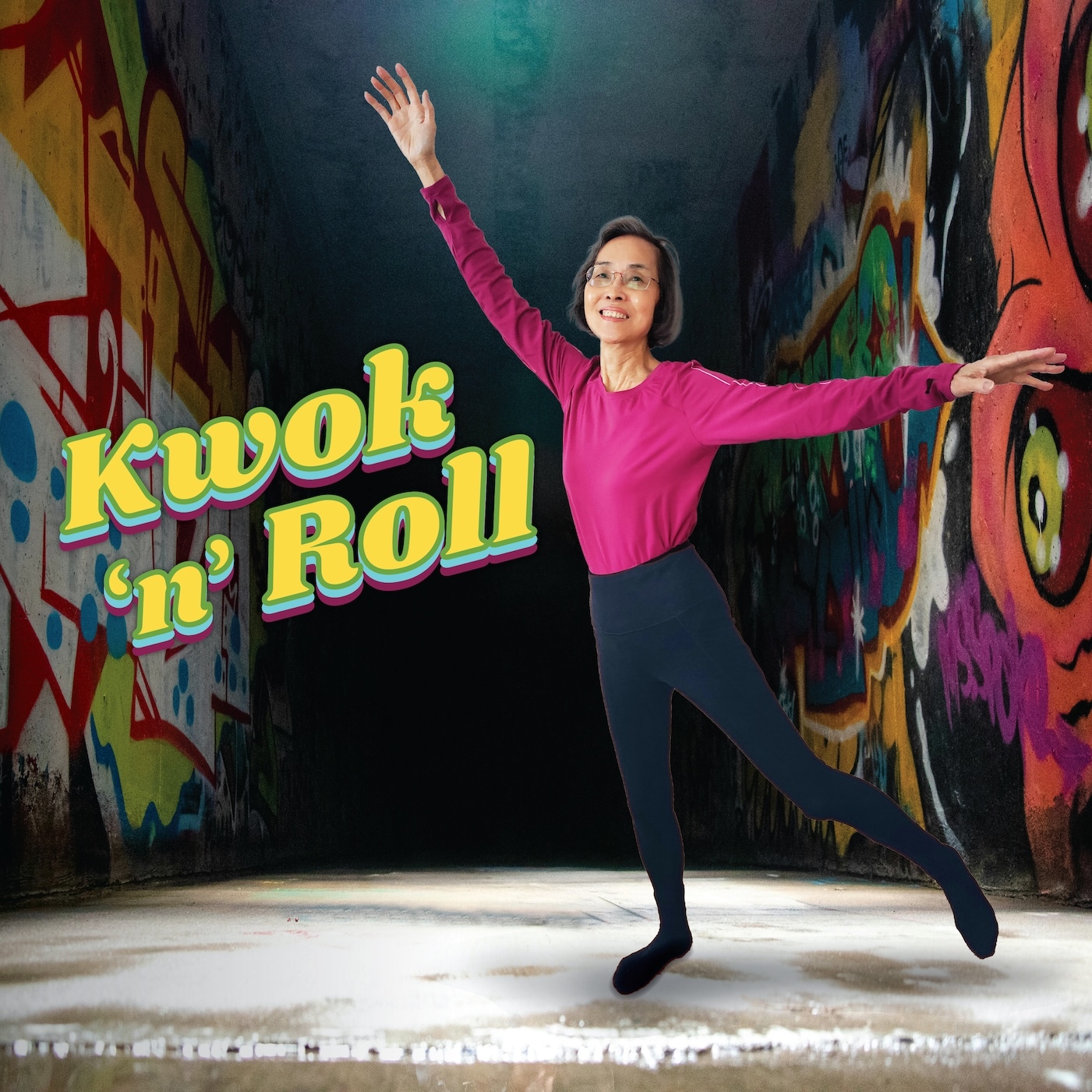
What does it mean to be a Christian and a person of faith in today’s challenging world? How can we have meaningful dialogue across racial, cultural, religious, and political differences to address the urgent needs of our time? Join Kwok Pui Lan, a pioneering postcolonial theologian, in her conversation with leading intellectuals, courageous religious leaders, fearless activists, and inspiring artists and roll along.
Episodes
23 minutes ago
23 minutes ago
23 min
How can Christian sexual ethics move past shame-based rules? We explore wisdom for navigating the digital age.
Postcolonial theologian Kwok Pui Lan talks with ethicist Kate Ott about the impact of technology on our intimate lives. From the prevalence of dating apps to the challenges posed by virtual reality and deepfakes, many traditional faith communities struggle to provide guidance that fosters wisdom instead of shame.
Kate introduces a values-based alternative rooted in honesty, mutuality, and digital literacy. We discuss why a pleasure-positive perspective is essential for AI ethics and why the physical reality of embodiment still matters when our encounters are mediated by screens.
Kate Ott is Professor of Christian Social Ethics at Garrett-Evangelical Theological Seminary.
Kate Ott's books: Sex, Tech, and Faith: Ethics for a Digital Age; and
7 days ago
7 days ago
22 min
Who rules China — and who decides what makes power legitimate? Postcolonial theologian Kwok Pui Lan talks with Peng Yin, Assistant Professor of Ethics at Boston University School of Theology, on Chinese political theology after Xi's visit to Washington.
In this interview, we move beyond trade and security headlines from the Xi Jinping Trump meeting to ask a deeper question about US-China relations : how is political power justified? Peng Yin explains what Chinese political theology is, how it differs from American debates on Christian nationalism, and why legitimacy is at its center.
We discuss his work on Thomas Aquinas and early Chinese ethics, natural law from Aquinas to Montesquieu and early modern Chinese reformers, and the church in China. The conversation closes with faith between two empires — for diaspora Christians, students, and all who want to persist in the good.
Peng Yin's research focuses on comparative religious ethics, political theology, and Chinese thought. His recent book is Persisting in the Good: Thomas Aquinas and Early Chinese Ethics.
Sep 23, 2026
Sep 23, 2026
22 min
Why can't our schools teach us to flourish? Postcolonial theologian Kwok Pui Lan talks with Rev. Dr. Patrick B. Reyes about becoming good ancestors for the next generation.
Rev. Dr. Patrick B. Reyes is a Chicano theologian, writer, and Dean and Executive Vice President at Auburn Theological Seminary. His new book Pedagogy of the Ancestors: Practices for Mentoring and Teaching Future Generations (WJK Books, 2026) asks how we learn to live on ancestor time and at the speed of love. In this conversation, we talk about his journey from gang life to seminary leadership, the purpose gap facing youth of color, how oppressive systems sever us from lineage, and what mentorship, youth ministry, and discipleship look like when they center ancestors, storytelling, and rituals for belonging.
Whether you are a pastor, teacher, mentor, or caregiver, you will leave with one practice you can try this week to help young people flourish — not just achieve.
New book — Pedagogy of the Ancestors
Patrick B. Reyes 's website.
Sep 18, 2026
Sep 18, 2026
20 min
Is Christian Zionism a heresy? South African theologian Dr. Thandi Gamedze explains what Kairos means from Soweto to Gaza.
In this Faithful Provocations conversation, I talk with Dr. Thandi Gamedze, Senior Researcher of the Desmond Tutu Centre for Religion and Social Justice at the University of the Western Cape, about the connection between Kairos South Africa and Kairos Palestine. We discuss why South African Christians called occupation apartheid, how Palestinian Christians mirrored the 1985 Kairos method in 2009, and what her analytical mapping of Christian Zionism in South Africa reveals for the global church today.
Dr. Gamedze is a contributor to my new edited volume The Anglican Church and Palestine (September 2026). If you want to understand Black theology, prophetic theology vs. state theology, and why the Anglican Church of Southern Africa has spoken most clearly for Palestine, start here.
In this episode:
Why 1985 Kairos was so dangerous to apartheid
What Kairos Palestine borrowed — and where it went further
How Christian Zionism is growing in South Africa today What global Anglicans are called to do now
Sep 11, 2026
Sep 11, 2026
23 min
What did Trump's Faith Advisory prayer calls sound like between the 2020 election and January 6th? Pentecostal theologian Amos Yong looked at the transcript of 25 calls and co-wrote Trump and the Politics of Prayer about what he found.
In this Faithful Provocations conversation, host Kwok Pui Lan traces how Yong became the theologian — growing up Asian American and Pentecostal, working on science and religion, and living theology alongside his brother with Down syndrome — before returning to the heart of the book: when prayer becomes warfare, when prophecy blesses power, and what prayer is for.
We talk about aggressive prayer, intercession vs spiritual warfare, prophecy and democracy grounded in dialogue, listening, and hospitality, and what Pentecostal theology can offer in a moment of AI, polarization, and fear.
Guest: Amos Yong, Professor of Theology and Mission, Fuller Seminary, co-author of Trump and the Politics of Prayer (with J. Derrick Lemons, Bloomsbury Academic, Sept 2026).
Sep 2, 2026
Sep 2, 2026
25 min
This Faithful Provocations conversation explores the historical connection between the British Empire and the Anglican Church to understand how these institutions shaped each other.
Kwok Pui Lan sits down with Canon Dr. Sanjee Perera, Lecturer in Mission and Evangelism at Cranmer Hall, Durham University, to discuss her forthcoming book, Church of Empire: The Church of England and Race in Global Perspective.
They explore:
• Why the Church of England was "Anglican in its character" while Anglicanism was "empire-based in its character"
• Her family's eight generations in a Sri Lankan church built in 1546 — before British colonization
• The 2018 psychological study across 42 dioceses that found belonging as a marginalized person in the Church of England was a psychologically distressing experience
• The book's global contributors, from Malawi to Hong Kong to the US Episcopal Church
• The spiritual practice that sustains her: a garden, with one plant for every person she prays for
About the guest: Canon Dr. Sanjee Perera is a cognitive psychologist and Lecturer in Mission and Evangelism at Cranmer Hall, Durham University, and a former advisor to the Archbishops on Minority Ethnic Anglican Concerns.
Aug 22, 2026
Aug 22, 2026
23 min
What happens to faith after a dictatorship threatens the church and society? Postcolonial theologian Kwok Pui Lan talks with Dr. Agnes M. Brazal — Filipina feminist theologian, activist under martial law, and author of A Theology of Southeast Asia: Liberation-Postcolonial Ethics in the Philippines — on how women reclaimed faith after the Marcos dictatorship and why Bai theology, rooted in the babaylan, is reshaping the church in the Philippines today. From handing out leaflets on the streets under Ferdinand Marcos to pioneering one of Asia's most influential feminist theologies, Brazal traces a journey many viewers will recognize: when power tries to use faith for control, does faith disappear — or become more honest?
In this episode, you will learn:
• What it was like to organize as an activist during martial law in the Philippines and why that experience led Brazal deeper into theology, not away from it
• Who the babaylans were — the women spiritual leaders erased by Spanish colonization — and why their memory matters for the church now
• What Bai theology is, where the name comes from, and how it reclaims indigenous Filipino spirituality for today
• How Filipina women theologians rebuilt faith after dictatorship — through people power, community, and postcolonial critique
Aug 14, 2026
Aug 14, 2026
22 min
Can artificial intelligence serve Black people — or is it building a future that leaves Black communities behind? Dr. Philip Butler breaks down black transhumanism, AI bias, and his vision for the Seekr Project: a distinctly Black conversational AI designed for mental health and critical Black consciousness.
📖 In this conversation:
• Why AI is not neutral — how bias gets built into the models
• Black Transhuman Liberation Theology, explained
• The Seekr Project: building AI that serves Black communities
• Transhumanism vs. posthumanism — and where faith fits
👤 ABOUT PHILIP BUTLER Dr. Philip Butler is Associate Professor of Theology and Black Post-human Artificial Intelligence Systems and Director of the AI Institute at the Iliff School of Theology. He is the founder of the Seekr Project and the author of Black Transhuman Liberation Theology: Technology and Spirituality (Bloomsbury Academic, 2021).
📖 Go deeper on Substack: [https://kwokpuilan.substack.com]